Residency in Spain in 2026
Securing residency in Spain in 2026 means navigating a third-country visa system that has tightened since Brexit, the closure of the Golden Visa, and a series of digital reforms to the way the Oficina de Extranjería processes applications. Below are the essentials for any international applicant.
- The seven principal routes are the Non-Lucrative Visa, Digital Nomad Visa, Student Visa, Employment Visa, Entrepreneur Visa, Investor Visa and Self-Employed Visa.
- The Golden Visa closed to new applicants on 3 April 2025 under Organic Law 1/2025. Existing holders retain their rights.
- Most permits are first granted for one year, then renewed for two-year periods, with permanent residency available after five years of continuous legal residency.
- UK, US, Canadian and Australian applicants are third-country nationals and must apply through the Spanish consulate of jurisdiction in their home country.
How to obtain residency in Spain
Spain has become one of the most attractive long-term relocation destinations in Western Europe, particularly for citizens of the United Kingdom, the United States, Canada and Australia.
Whether the goal is retirement, remote work, entrepreneurship, study or employment, securing the right form of residency in Spain is the foundation of any successful move.
The 2026 framework is more structured than at any point in the past decade.
The Oficina de Extranjería has digitalised most procedures, the Startup Law 28/2022 has matured into a stable regime for digital nomads and innovative entrepreneurs, and Real Decreto 1155/2024, of 19 November, in force since 20 May 2025, introduced substantial procedural reforms to immigration applications, residency renewals and family reunification, replacing the earlier Real Decreto 557/2011.
This guide explains the principal routes, the documentation required, the typical timelines and the practical pitfalls that international applicants encounter.
“Spain hosted 6,911,971 foreign residents as of 1 January 2025, representing 14.1% of the total population, with the foreign-born share growing faster than in any other large EU economy over the past decade.”
Source: Instituto Nacional de Estadística (INE), Padrón Continuo 2025 [1].
Who needs to apply for residency in Spain?
The application requirement depends primarily on nationality. EU and EFTA citizens enjoy free-movement rights and register their residency directly with the Spanish authorities once present in the country.

All other nationals are third-country nationals and must obtain a visa from a Spanish consulate before arrival, then formalise their residency in Spain.
Visitors versus residents
Third-country nationals can stay in the Schengen Area for up to 90 days within any rolling 180-day period as visa-exempt visitors (UK, US, Canadian, Australian passport holders) or with a Schengen tourist visa.
Visitors cannot work, cannot enrol in the public healthcare system and are taxed only on Spanish-source income.
The EU’s Entry/Exit System (EES) went live in October 2025, replacing manual passport stamping with biometric registration of every Schengen entry and exit.
The complementary ETIAS pre-travel authorisation has an EU-wide launch date that has been repeatedly revised; check the official travel-europe.europa.eu/etias page for the current target before relying on a specific date.
Anyone planning a stay longer than 90 days must secure formal residency before arrival.
British citizens post-Brexit
UK nationals are now third-country nationals for residency purposes. The position is materially different for those resident in Spain before 31 December 2020, who retain protected status under the Withdrawal Agreement.
Our overview of the post-Brexit framework for British expats in Spain covers the dual track in detail.
The seven principal residency routes in 2026
Spain offers seven main residency pathways.
The right route depends on your financial situation, professional activity and long-term goals.
The table below summarises the key parameters for each.
| Visa route | Best for | Income / capital threshold (2026) | Initial validity |
|---|---|---|---|
| Non-Lucrative Visa | Retirees, financially independent | €2,400/month + 25% per dependant | 1 year |
| Digital Nomad Visa | Remote workers, freelancers | €34,188/year (200% SMI) | 3 years |
| Student Visa | University, language, vocational | €600/month minimum | Programme duration |
| Employment Visa | Workers with a Spanish employer | Spanish job offer required | 1 year |
| Entrepreneur Visa | Innovative founders | ENISA favourable opinion | 3 years |
| Self-Employed Visa | Autónomos with business plan | Viable business plan + capital | 1 year |
| Investor Visa | Existing holders only | Closed to new applicants since 3 April 2025 | N/A |
Non-Lucrative Visa
The most popular route for retirees and financially independent individuals is the non-lucrative visa.
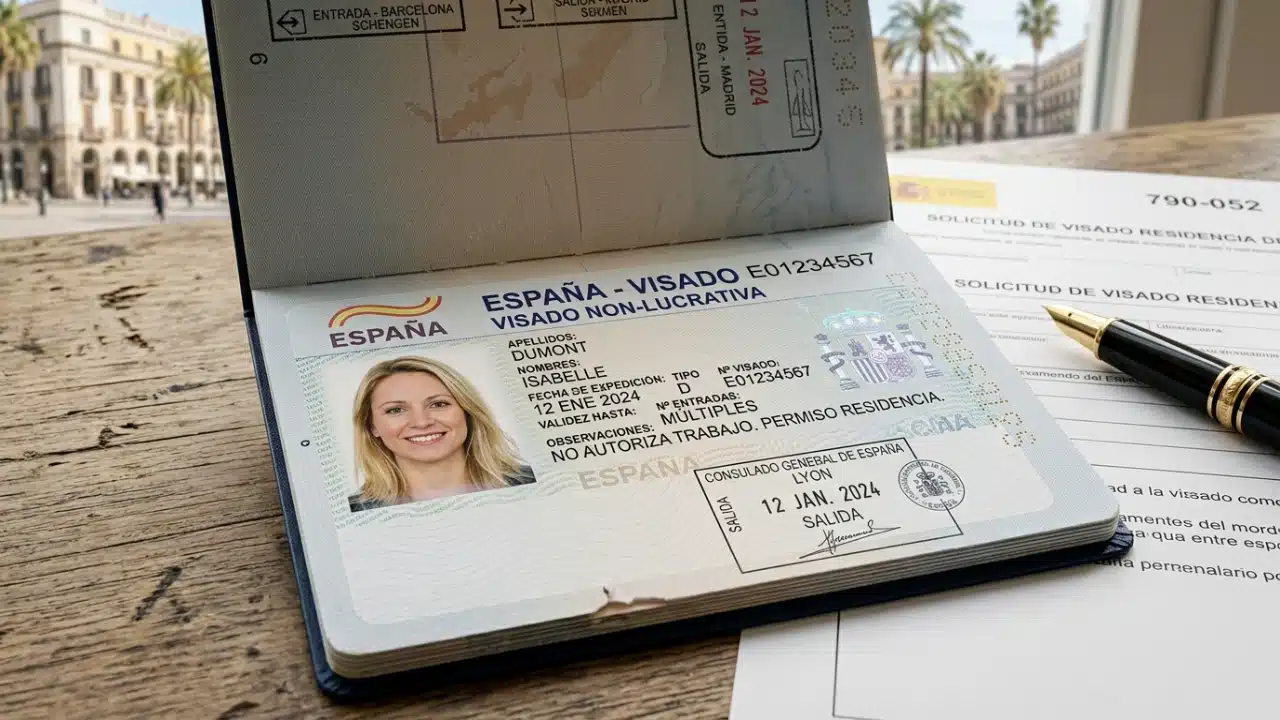
Applicants must show passive income or savings sufficient to support themselves without employment in Spain, plus comprehensive private health insurance valid throughout Spain.
Digital Nomad Visa
Introduced under Startup Law 28/2022 and refined for 2026, this is the fastest-growing residency route for remote workers.
Applicants need three years of professional experience or relevant qualifications, an income of at least €34,188 per year (200% of the SMI in 2026), and a contractual relationship of at least three months’ standing with a non-Spanish employer or clients.
Spanish-source income is capped at 20% of total professional activity.
The visa is renewable up to a total of five years, after which long-term residency may be sought.
The mechanics for employed applicants are addressed in our note on the Spain Digital Nomad Visa for W-2 employees, and the broader application process is in our complete Digital Nomad Visa application guide.
Entrepreneur Visa and Startup Visa
For founders, the Spain Startup Visa offers a fast-track residency tied to an innovative venture, processed by the Empresa Nacional de Innovación (ENISA) through a centralised UGE unit.
The broader Entrepreneur Visa covers non-innovative businesses with a viable plan, sufficient capital and a Spanish economic-impact assessment.
“Digital Nomad Visa applications under the Startup Law fast-track procedure are commonly reported to take 20 to 30 working days for complete applications, though individual timelines vary by consulate and case complexity.”
Source: immigration-law practitioner reporting; official Ministry of Inclusion, Social Security and Migration statistics on processing times were not available at time of writing.
The residency application process
The application process generally begins at the Spanish consulate of jurisdiction in the applicant’s home country, although certain routes (notably the Digital Nomad and Startup Visas) can be filed from within Spain through the centralised UGE unit.
The typical sequence is as follows.
- Document preparation: passport, criminal record certificate (apostilled and sworn-translated), medical certificate, financial evidence, private health insurance, accommodation evidence and the relevant application form.
- Consular submission: in-person filing at the Spanish consulate of jurisdiction. Most consulates require pre-booked appointments through external service providers.
- Consular processing: typically 1 to 3 months, although Digital Nomad and Startup Visas through the UGE can be resolved in 20 to 30 working days.
- Visa issuance and entry: the visa permits a single entry and a 90-day window to enter Spain.
- NIE and TIE collection: within 30 days of arrival, applicants attend the Oficina de Extranjería to register, take biometrics and collect the TIE card.
- Padrón registration: registration at the local town hall confirming the address of residency.
The full first-30-days administrative checklist, including bank account, social security and digital certificate, is set out in our practical guide on moving to Valencia.
Residency, tax residency and the 183-day rule
One of the most frequently misunderstood aspects of Spanish residency is the distinction between immigration residency (the right to live in Spain) and tax residency (the obligation to declare worldwide income to the AEAT).
Both regimes can apply simultaneously, and each is governed by different rules.
When does Spanish tax residency apply?
You become a Spanish tax resident if you meet any one of the following Article 9 LIRPF tests:
- Physical presence: more than 183 days in Spain in a calendar year, including sporadic absences, unless you prove tax residency elsewhere.
- Centre of economic interests: Spain is the principal location of your economic activities or assets.
- Family centre of interest: presumption of residency where your spouse and dependent minor children reside in Spain.
The interaction with home-country tax systems is governed by bilateral conventions.
UK applicants should review our analysis of UK-Spain double taxation, and US applicants should consult our note on the US and Spanish tax implications of residency.
The Beckham Law for newly arriving professionals
Newly arriving foreign professionals may qualify for Spain’s special expatriate regime under Article 93 of Law 35/2006.
The regime, popularly known as the Beckham Law Spanish tax regime, taxes qualifying Spanish-source income at a flat 24% up to €600,000 (47% above) for up to six tax years.
Modelo 720 and overseas assets
Spanish tax residents holding overseas assets above €50,000 in any of three categories (bank accounts, securities, real estate) must file the annual Modelo 720.
Although the 2022 ECJ ruling reformed the disproportionate penalty regime, the declaration obligation remains live.
Healthcare, social security and the rights residency confers
Residency in Spain confers a substantial bundle of rights, including access to public services, freedom to work in most cases, family reunification and a defined pathway to long-term residency and citizenship.
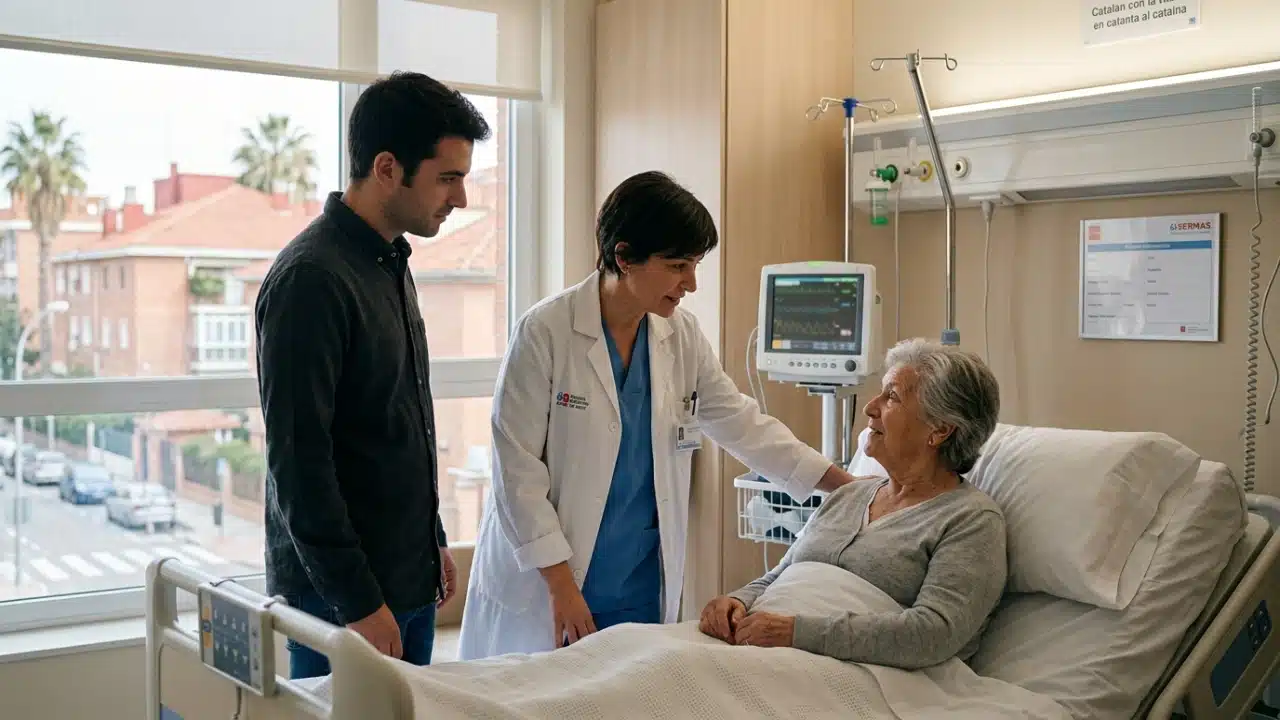
The exact scope depends on the specific route.
- Public healthcare: access through Spanish social security contributions, S1 forms (UK pensioners), the Convenio Especial pay-in scheme or, in transition, private insurance. The full eligibility framework is in our overview of the Spanish healthcare system.
- Education: state schools, concertada schools and over 30 international schools across the Valencian Community.
- Driving: EU licences are recognised. Most third-country licences require a Spanish theory and practical exam within six months of obtaining residency.
- Family reunification: spouses, dependent children and dependent ascendants can be brought through the appropriate procedure.
- Long-term residency: after five years of continuous legal residency, the path to long-term residence in Spain opens, with rights approaching those of Spanish nationals.
- Citizenship: typically after 10 years for most third-country nationals, reduced to 2 years for Latin American, Andorran, Filipino, Equatorial Guinean, Portuguese and Sephardic applicants.
“Around 266,000 British nationals hold legal residency in Spain, with the largest concentrations in the Valencian Community, Andalusia and the Canary Islands. Spain consistently ranks first globally for quality-of-life satisfaction in the InterNations Expat Insider survey.”
Source: INE Padrón 2025 and InterNations Expat Insider 2025/2026 [1][3].
Common pitfalls when applying for residency in Spain
The vast majority of refusals and delays we see in practice arise from preventable documentation errors. The principal pitfalls are:
- Incomplete or stale criminal record certificates: most consulates require a certificate issued within the last 90 days, apostilled and sworn-translated.
- Insufficient or non-compliant private health insurance: the policy must cover all Spanish territory, with no co-payments or deductibles, and equivalent coverage to the public system.
- Inadequate financial evidence: bank statements must be recent, complete and translated where required. Travel insurance is not accepted.
- Mistranslated documents: only translations by sworn translators registered with the Spanish Ministry of Foreign Affairs are accepted.
- Schengen overstay history: applicants who have overstayed in any Schengen member state are now systematically detected through EES and may face refusal. Our specialist note on overstaying a visa in Spain sets out the consequences.
- Missing the post-arrival window: failure to attend the TIE appointment within 30 days of arrival can void the visa.
Applicants who have remained in Spain without proper status should review their position carefully, including the 2024-2025 extraordinary regularisation for foreigners in Spain, which created a one-time pathway for certain undocumented residents.
What has changed for 2026
The 2026 framework reflects a series of cumulative reforms over the past three years.
The most consequential changes for international applicants are:
- Closure of the Golden Visa (3 April 2025): the residency-by-investment route via real estate ended for new applicants under Organic Law 1/2025.
- EES rollout (October 2025): biometric registration of every Schengen entry and exit for non-EU nationals.
- ETIAS (expected late 2026): pre-travel authorisation for visa-exempt third-country nationals.
- Real Decreto 1155/2024 (Foreigners’ Regulation): in force since 20 May 2025, substantial procedural reforms to immigration applications, residency renewals and family reunification, replacing Real Decreto 557/2011.
- Beckham Law extensions: Startup Law 28/2022 expanded the special expatriate regime to remote workers, family members and digital nomads.
- Digital Nomad Visa thresholds: the 2026 income threshold is set at 200% of the SMI, equivalent to approximately €34,188 per year.
- Increased AEAT enforcement: post-residency tax compliance has tightened, particularly around the 3% retention on property sales by non-residents and Modelo 720 filings.
Speak to our immigration lawyers in Valencia
Contact our legal team for personalised guidance on residency in Spain in 2026. We work in English, French, Spanish and Russian, and have advised international applicants from our Valencia office for over 65 years.
Email: felix.delaguia@delaguialuzon.com
Phone: +34 963 74 16 57
Office: Avinguda Regne de Valencia, 6, 1º-2º, 46005 Valencia, Spain
Visit our immigration law service page to learn more about our visa, residency and post-arrival support.
FAQs
How long does it take to obtain residency in Spain?
Consular processing typically takes 1 to 3 months, with Digital Nomad and Startup Visas through the UGE often resolved in 20 to 30 working days. Add 1 to 2 weeks for biometric appointments and 30 to 40 days post-arrival for TIE collection.
Can I apply for residency after arriving in Spain?
Generally, no for most routes, although the Digital Nomad Visa, Entrepreneur Visa and Startup Visa allow applications from within Spain in defined circumstances. Other routes require filing at the Spanish consulate of jurisdiction in the applicant’s home country.
Do I need to learn Spanish to qualify for residency?
No for initial residency. Yes, for citizenship, where DELE A2 and the CCSE civic and cultural test are required. A2 corresponds to elementary conversational Spanish.
How much income do I need for the Non-Lucrative Visa?
Approximately €2,400 per month for the principal applicant, plus 25% per dependant. Higher amounts strengthen the application. Income must be passive (pensions, investments, rentals) and verifiable through bank statements and source documents.
What happened to the Golden Visa?
It closed to new applicants on 3 April 2025 under Organic Law 1/2025. Existing holders retain their rights and renewal options. Alternative routes for property buyers seeking residency are the Non-Lucrative Visa (passive income) and the Digital Nomad Visa (remote work).
Can I work in Spain on a Non-Lucrative Visa?
No. The Non-Lucrative Visa expressly prohibits employment in Spain. Holders can engage in passive investment activities and receive foreign income, but Spanish-source employment requires a different visa or a modification procedure.
Will I become a Spanish tax resident automatically?
You become a Spanish tax resident if you spend more than 183 days in Spain in a calendar year, if Spain becomes the centre of your economic interests, or if your spouse and dependent children reside in Spain. Tax residency is governed independently of immigration residency.
Can I travel within the Schengen Area on a Spanish residency permit?
Yes. A Spanish residency permit (TIE) permits free travel within the Schengen Area for up to 90 days within any 180 days.
How long until I can apply for Spanish nationality?
Most third-country nationals qualify after 10 years of continuous legal residency. Latin American, Andorran, Filipino, Equatorial Guinean, Portuguese and Sephardic applicants qualify after 2 years. Marriage to a Spanish national reduces the timeline to 1 year.
What happens if my visa application is refused?
Refusals can be appealed administratively (recurso de reposición) within one month, or judicially (recurso contencioso-administrativo) within two months. In many cases, a fresh application addressing the deficiencies is more efficient than an appeal. Our team handles both routes.
Reference list
- Instituto Nacional de Estadística (INE), Padrón Continuo 2025: https://www.ine.es/
- Ministry of Inclusion, Social Security and Migration, Foreign Residents Statistics and Startup Law Annual Report 2025: https://www.inclusion.gob.es/
- InterNations, Expat Insider 2025/2026: https://www.internations.org/expat-insider/
- Agencia Estatal de Administración Tributaria (AEAT), Manual práctico IRPF 2026: https://www.agenciatributaria.gob.es/
- BOE, Real Decreto 1155/2024 (Reglamento de Extranjería) and Ley 14/2013 de Emprendedores: https://www.boe.es/
- European Commission, Entry/Exit System (EES) and ETIAS: https://travel-europe.europa.eu/ees_en
- HM Government, Living in Spain Guide: https://www.gov.uk/world/spain