Registering a civil partnership in Spain as a foreigner: The pareja de hecho
- A pareja de hecho is a registered unmarried partnership recognised across Spain, available to couples of any gender and any nationality.
- Registration requirements and benefits vary significantly between Spain’s Autonomous Communities, including the Valencian Community.
- It can provide some of the legal benefits of marriage, including in certain residency, tax, and social security contexts.
- Most regions require the couple to demonstrate a period of cohabitation and joint residence (empadronamiento) before registering.
- Unlike marriage, the pareja de hecho is generally easier to dissolve, but it also confers fewer automatic rights in some areas.
- Our Valencia team advises international couples on whether a pareja de hecho or marriage is the more appropriate option for their situation.
Can expats register in a civil partnership in Spain?
Not every couple wishes to marry, and Spanish law recognises this.
Registering a civil partnership in Spain as a foreigner is a structured legal process that varies by region, carries meaningful immigration and tax implications, and requires careful preparation.
The pareja de hecho, or registered civil partnership, is a legal status available to unmarried couples who live together in a stable relationship.
It is open to couples of any gender and any nationality, and it can confer meaningful legal benefits.
For international couples in Spain, particularly those where one partner is seeking residency or where the couple wishes to formalise their relationship without marrying, the pareja de hecho is an option worth understanding in the context of Spain’s broader immigration law framework.
What is a pareja de hecho?
A pareja de hecho is a formally registered partnership between two people who live together as a couple but are not married.
It is recognised throughout Spain, but it is regulated at the level of the Autonomous Communities rather than nationally.
This means the registration requirements, the rights it confers, and the registry where it is recorded all vary depending on the region in which the couple lives.
The Valencian Community maintains its own registry of parejas de hecho, with its own specific requirements.
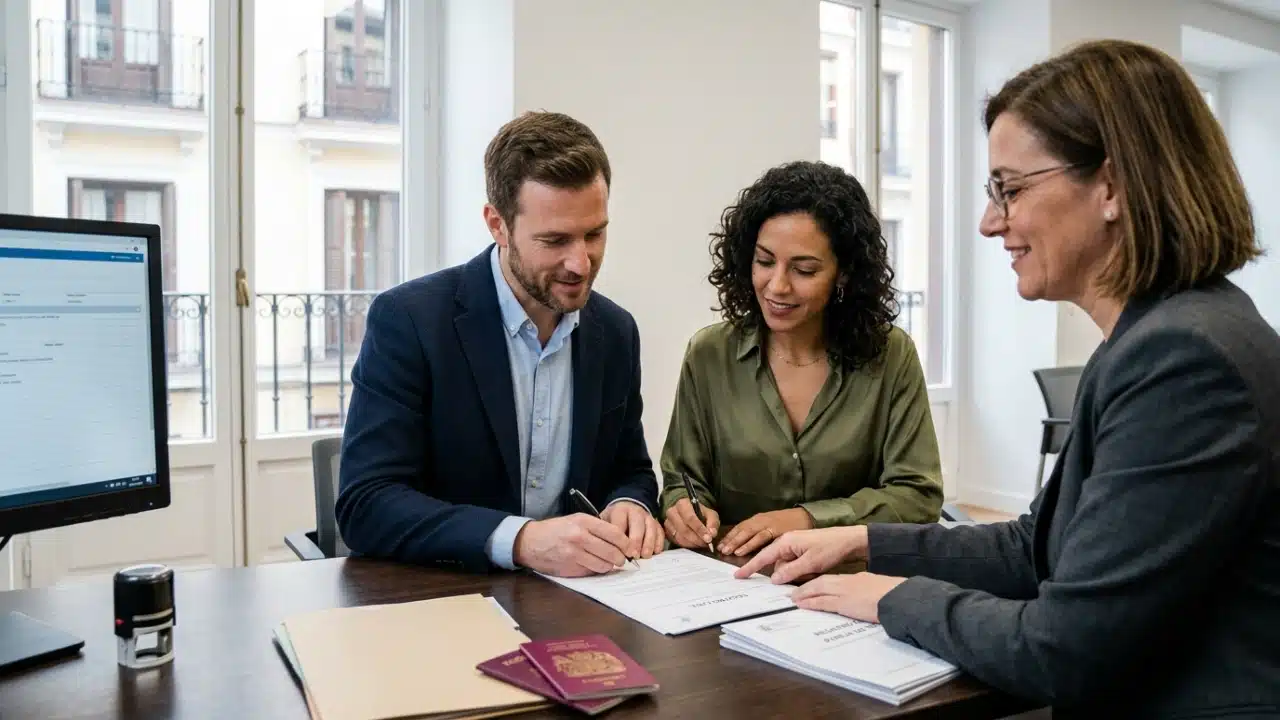
Who can register a civil partnership in Spain as a foreigner?
The general conditions, which vary by region, typically include:
- Both partners must be of legal age (18) or emancipated.
- Neither partner may be married or already registered in another pareja de hecho.
- The partners must not be closely related.
- The couple must demonstrate a stable relationship, often evidenced by a period of cohabitation.
- At least one partner, and often both, must be registered as resident in the relevant Autonomous Community through empadronamiento.
The cohabitation and residence requirements are the most common stumbling blocks for international couples, particularly those who have recently arrived in Spain.
Before beginning the process, both partners will need a valid NIE (Número de Identidad de Extranjero), which is required for any formal legal or administrative procedure in Spain.
Pareja de hecho versus marriage
| Feature | Pareja de hecho | Marriage |
|---|---|---|
| Legal framework | Regional (varies by community) | National (Civil Code) |
| Recognised internationally | Variable | Widely |
| Dissolution | Relatively simple | Requires divorce process |
| Path to nationality | Not the same accelerated route as marriage | One year for spouse of a Spaniard |
| Inheritance rights | Variable by region | Established under Civil Code |
Benefits of registering a pareja de hecho
- Recognition for certain residency applications, in particular for the unmarried partner of an EU or Spanish citizen.
- Potential entitlement to a partner’s social security and pension benefits, subject to conditions.
- Access to joint treatment in certain administrative and healthcare contexts.
- Recognition of the relationship for some regional tax purposes, which varies by Autonomous Community.
- A formal legal record of the relationship is useful for a range of administrative purposes.
For UK nationals who arrived in Spain after 1 January 2021, understanding the interplay between partnership status and residency rights is particularly important, as the post-Brexit landscape for British expats living in Spain differs significantly from the rules that applied under freedom of movement.
The residency dimension
For a non-EU national in a relationship with a Spanish or EU citizen, a registered pareja de hecho can support an application for a residence card as the partner of an EU citizen, in a manner comparable to marriage.
However, the evidentiary requirements can be more demanding, as the authorities will examine the stability and genuineness of the partnership.
Non-EU partners who are granted residency on this basis will need to obtain a TIE (Tarjeta de Identidad de Extranjero), the physical residence card issued to non-EU nationals legally residing in Spain.
For couples whose primary objective is to secure residency, the choice between a pareja de hecho and marriage should be made with specific legal advice, as the two routes carry different requirements and consequences.
International professionals considering relocation may also wish to explore whether working in Spain as a foreigner under a specific visa category is relevant to their circumstances, alongside partnership registration.
Tax and inheritance implications
The tax treatment of a registered pareja de hecho varies by Autonomous Community and is one area where the Valencian Community applies its own rules.
For inheritance purposes, the partner in a pareja de hecho may not automatically receive the same treatment as a spouse under the national Civil Code, making it essential to have a properly structured will and estate plan.
International couples should take advice on how the Spanish inheritance tax and cross-border succession rules interact with their personal circumstances, particularly where assets are held in more than one country.
Our team regularly advises on international inheritances in Spain, including where the surviving partner holds a different nationality or is registered under a civil partnership rather than a marriage.
For those with assets in both Spain and the UK, understanding how the Spain–UK double tax treaty interacts with your status as a registered partner is also relevant to long-term financial planning.
Registering a civil partnership in Spain: the Valencian Community
- Confirm both partners meet the eligibility conditions, including the residence requirement.
- Gather the required documents: identity documents, empadronamiento certificates, civil status certificates, and proof of the relationship.
- Submit the application to the Valencian Community registry of parejas de hecho.
- Attend any required appointment or appearance.
- Receive the registration certificate confirming the pareja de hecho.
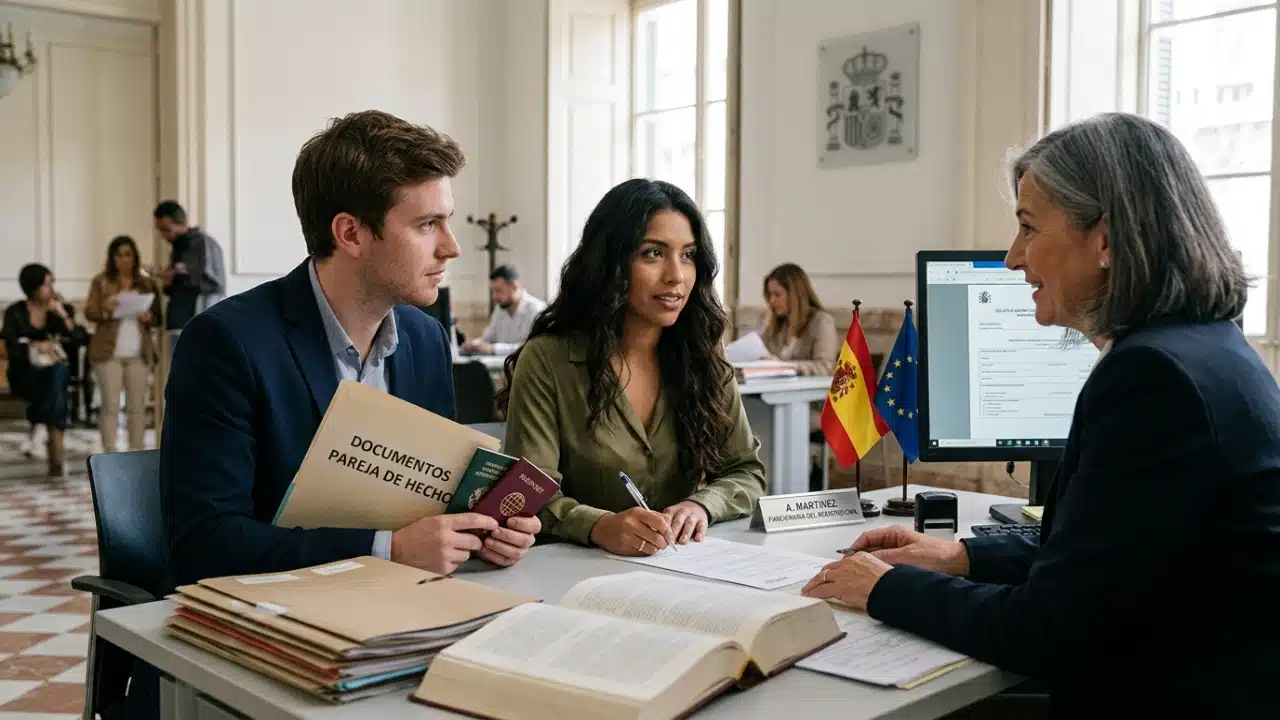
Foreign documents will typically need to be officially translated into Spanish by a sworn translator and, where required, apostilled under the Hague Convention.
Couples who are also considering property purchase as part of their move to Spain should be aware that partnership status can affect how a property is legally held and what happens to it on dissolution or death, as set out in our guide to buying property in Spain.
Speak to our team about registering a civil partnership in Spain as a foreigner
Our Valencia team advises international couples on the pareja de hecho process, the regional requirements in the Valencian Community, and whether marriage or civil partnership is the better fit for your circumstances.
Email: felix.delaguia@delaguialuzon.com
Phone: +34 963 74 16 57
FAQs
Is a pareja de hecho recognised throughout Spain?
A pareja de hecho is recognised across Spain, but because it is regulated regionally, the specific rights and the registry vary between Autonomous Communities.
A partnership registered in one region is generally recognised in others, though the practical effects can differ.
Can a foreigner register a pareja de hecho with a Spanish citizen?
Yes.
A foreigner can register a pareja de hecho with a Spanish citizen or another foreigner, provided the eligibility and residence conditions of the relevant Autonomous Community are met.
Does a pareja de hecho give the same nationality rights as marriage?
No.
The accelerated one-year route to Spanish nationality applies to the spouse of a Spanish citizen through marriage.
A pareja de hecho does not confer the same accelerated nationality pathway, which is an important distinction for couples considering their long-term plans.
Is it easier to end a pareja de hecho than a marriage?
Generally yes.
Dissolving a pareja de hecho is typically a simpler administrative process than obtaining a divorce, though the financial and parental consequences of separation still need to be addressed properly.
Do UK nationals need any additional documentation when registering a civil partnership in Spain?
UK nationals will need to provide a certificate of no impediment to marriage or civil partnership from the relevant UK authority, officially translated into Spanish and apostilled.
Given the post-Brexit changes to how UK documents are processed in Spain, it is advisable to seek legal guidance before submitting any application.
The pareja de hecho: Spain’s registered civil partnership
- A pareja de hecho is a registered unmarried partnership recognised across Spain, available to couples of any gender and any nationality.
- Registration requirements and benefits vary significantly between Spain’s Autonomous Communities, including the Valencian Community.
- It can provide some of the legal benefits of marriage, including in certain residency, tax and social security contexts.
- Most regions require the couple to demonstrate a period of cohabitation and joint residence (empadronamiento) before registering.
- Unlike marriage, the pareja de hecho is generally easier to dissolve, but it also confers fewer automatic rights in some areas.
- Our Valencia team advises international couples on whether a pareja de hecho or marriage is the more appropriate option for their situation.
Not every couple wishes to marry, and Spanish law recognises this.
Registering a civil partnership in Spain as a foreigner is a structured legal process that varies by region, carries meaningful immigration and tax implications, and requires careful preparation.
The pareja de hecho, or registered civil partnership, is a legal status available to unmarried couples who live together in a stable relationship.
It is open to couples of any gender and any nationality, and it can confer meaningful legal benefits.
For international couples in Spain, particularly those where one partner is seeking residency or where the couple wishes to formalise their relationship without marrying, the pareja de hecho is an option worth understanding in the context of Spain’s broader immigration law framework.
What is a pareja de hecho?
A pareja de hecho is a formally registered partnership between two people who live together as a couple but are not married.
It is recognised throughout Spain, but it is regulated at the level of the Autonomous Communities rather than nationally.
This means the registration requirements, the rights it confers and the registry where it is recorded all vary depending on the region in which the couple lives.
The Valencian Community maintains its own registry of parejas de hecho, with its own specific requirements.
Who can register a civil partnership in Spain as a foreigner?
The general conditions, which vary by region, typically include:
- Both partners must be of legal age (18) or emancipated.
- Neither partner may be married or already registered in another pareja de hecho.
- The partners must not be closely related.
- The couple must demonstrate a stable relationship, often evidenced by a period of cohabitation.
- At least one partner, and often both, must be registered as resident in the relevant Autonomous Community through empadronamiento.
The cohabitation and residence requirements are the most common stumbling blocks for international couples, particularly those who have recently arrived in Spain.
Before beginning the process, both partners will need a valid NIE (Número de Identidad de Extranjero), which is required for any formal legal or administrative procedure in Spain.
Pareja de hecho versus marriage
| Feature | Pareja de hecho | Marriage |
|---|---|---|
| Legal framework | Regional (varies by community) | National (Civil Code) |
| Recognised internationally | Variable | Widely |
| Dissolution | Relatively simple | Requires divorce process |
| Path to nationality | Not the same accelerated route as marriage | One year for spouse of a Spaniard |
| Inheritance rights | Variable by region | Established under Civil Code |
Benefits of registering a pareja de hecho
- Recognition for certain residency applications, in particular for the unmarried partner of an EU or Spanish citizen.
- Potential entitlement to a partner’s social security and pension benefits, subject to conditions.
- Access to joint treatment in certain administrative and healthcare contexts.
- Recognition of the relationship for some regional tax purposes, which varies by Autonomous Community.
- A formal legal record of the relationship is useful for a range of administrative purposes.
For UK nationals who arrived in Spain after 1 January 2021, understanding the interplay between partnership status and residency rights is particularly important, as the post-Brexit landscape for British expats living in Spain differs significantly from the rules that applied under freedom of movement.
The residency dimension
For a non-EU national in a relationship with a Spanish or EU citizen, a registered pareja de hecho can support an application for a residence card as the partner of an EU citizen, in a manner comparable to marriage.
However, the evidentiary requirements can be more demanding, as the authorities will examine the stability and genuineness of the partnership.
Non-EU partners who are granted residency on this basis will need to obtain a TIE (Tarjeta de Identidad de Extranjero), the physical residence card issued to non-EU nationals legally residing in Spain.
For couples whose primary objective is to secure residency, the choice between a pareja de hecho and marriage should be made with specific legal advice, as the two routes carry different requirements and consequences.
International professionals considering relocation may also wish to explore whether working in Spain as a foreigner under a specific visa category is relevant to their circumstances, alongside partnership registration.
Tax and inheritance implications
The tax treatment of a registered pareja de hecho varies by Autonomous Community and is one area where the Valencian Community applies its own rules.
For inheritance purposes, the partner in a pareja de hecho may not automatically receive the same treatment as a spouse under the national Civil Code, making it essential to have a properly structured will and estate plan.
International couples should take advice on how Spanish inheritance tax and cross-border succession rules interact with their personal circumstances, particularly where assets are held in more than one country.
Our team regularly advises on international inheritances in Spain, including where the surviving partner holds a different nationality or is registered under a civil partnership rather than a marriage.
For those with assets in both Spain and the UK, understanding how the Spain–UK double tax treaty interacts with your status as a registered partner is also relevant to long-term financial planning.
How to register in the Valencian Community
- Confirm both partners meet the eligibility conditions, including the residence requirement.
- Gather the required documents: identity documents, empadronamiento certificates, civil status certificates and proof of the relationship.
- Submit the application to the Valencian Community registry of parejas de hecho.
- Attend any required appointment or appearance.
- Receive the registration certificate confirming the pareja de hecho.
Foreign documents will typically need to be officially translated into Spanish by a sworn translator and, where required, apostilled under the Hague Convention.
Couples who are also considering property purchase as part of their move to Spain should be aware that partnership status can affect how a property is legally held and what happens to it on dissolution or death, as set out in our guide to buying property in Spain.
Speak to our team about registering a civil partnership in Spain as a foreigner
Our Valencia team advises international couples on the pareja de hecho process, the regional requirements in the Valencian Community, and whether marriage or civil partnership is the better fit for your circumstances.
Email: felix.delaguia@delaguialuzon.com
Phone: +34 963 74 16 57
Frequently asked questions
Is a pareja de hecho recognised throughout Spain?
A pareja de hecho is recognised across Spain, but because it is regulated regionally, the specific rights and the registry vary between Autonomous Communities.
A partnership registered in one region is generally recognised in others, though the practical effects can differ.
Can a foreigner register a pareja de hecho with a Spanish citizen?
Yes.
A foreigner can register a pareja de hecho with a Spanish citizen or another foreigner, provided the eligibility and residence conditions of the relevant Autonomous Community are met.
Does a pareja de hecho give the same nationality rights as marriage?
No.
The accelerated one-year route to Spanish nationality applies to the spouse of a Spanish citizen through marriage.
A pareja de hecho does not confer the same accelerated nationality pathway, which is an important distinction for couples considering their long-term plans.
Is it easier to end a pareja de hecho than a marriage?
Generally yes.
Dissolving a pareja de hecho is typically a simpler administrative process than obtaining a divorce, though the financial and parental consequences of separation still need to be addressed properly.
Do UK nationals need any additional documentation when registering a civil partnership in Spain?
UK nationals will need to provide a certificate of no impediment to marriage or civil partnership from the relevant UK authority, officially translated into Spanish and apostilled.
Given the post-Brexit changes to how UK documents are processed in Spain, it is advisable to seek legal guidance before submitting any application.
The pareja de hecho: Spain’s registered civil partnership
- A pareja de hecho is a registered unmarried partnership recognised across Spain, available to couples of any gender and any nationality.
- Registration requirements and benefits vary significantly between Spain’s Autonomous Communities, including the Valencian Community.
- It can provide some of the legal benefits of marriage, including in certain residency, tax and social security contexts.
- Most regions require the couple to demonstrate a period of cohabitation and joint residence (empadronamiento) before registering.
- Unlike marriage, the pareja de hecho is generally easier to dissolve, but it also confers fewer automatic rights in some areas.
- Our Valencia team advises international couples on whether a pareja de hecho or marriage is the more appropriate option for their situation.
Not every couple wishes to marry, and Spanish law recognises this.
Registering a civil partnership in Spain as a foreigner is a structured legal process that varies by region, carries meaningful immigration and tax implications, and requires careful preparation.
The pareja de hecho, or registered civil partnership, is a legal status available to unmarried couples who live together in a stable relationship.
It is open to couples of any gender and any nationality, and it can confer meaningful legal benefits.
For international couples in Spain, particularly those where one partner is seeking residency or where the couple wishes to formalise their relationship without marrying, the pareja de hecho is an option worth understanding in the context of Spain’s broader immigration law framework.
What is a pareja de hecho?
A pareja de hecho is a formally registered partnership between two people who live together as a couple but are not married.
It is recognised throughout Spain, but it is regulated at the level of the Autonomous Communities rather than nationally.
This means the registration requirements, the rights it confers and the registry where it is recorded all vary depending on the region in which the couple lives.
The Valencian Community maintains its own registry of parejas de hecho, with its own specific requirements.
Who can register a civil partnership in Spain as a foreigner?
The general conditions, which vary by region, typically include:
- Both partners must be of legal age (18) or emancipated.
- Neither partner may be married or already registered in another pareja de hecho.
- The partners must not be closely related.
- The couple must demonstrate a stable relationship, often evidenced by a period of cohabitation.
- At least one partner, and often both, must be registered as resident in the relevant Autonomous Community through empadronamiento.
The cohabitation and residence requirements are the most common stumbling blocks for international couples, particularly those who have recently arrived in Spain.
Before beginning the process, both partners will need a valid NIE (Número de Identidad de Extranjero), which is required for any formal legal or administrative procedure in Spain.
Pareja de hecho versus marriage
| Feature | Pareja de hecho | Marriage |
|---|---|---|
| Legal framework | Regional (varies by community) | National (Civil Code) |
| Recognised internationally | Variable | Widely |
| Dissolution | Relatively simple | Requires divorce process |
| Path to nationality | Not the same accelerated route as marriage | One year for spouse of a Spaniard |
| Inheritance rights | Variable by region | Established under Civil Code |
Benefits of registering a pareja de hecho
- Recognition for certain residency applications, in particular for the unmarried partner of an EU or Spanish citizen.
- Potential entitlement to a partner’s social security and pension benefits, subject to conditions.
- Access to joint treatment in certain administrative and healthcare contexts.
- Recognition of the relationship for some regional tax purposes, which varies by Autonomous Community.
- A formal legal record of the relationship, useful for a range of administrative purposes.
For UK nationals who arrived in Spain after 1 January 2021, understanding the interplay between partnership status and residency rights is particularly important, as the post-Brexit landscape for British expats living in Spain differs significantly from the rules that applied under freedom of movement.
The residency dimension
For a non-EU national in a relationship with a Spanish or EU citizen, a registered pareja de hecho can support an application for a residence card as the partner of an EU citizen, in a manner comparable to marriage.
However, the evidentiary requirements can be more demanding, as the authorities will examine the stability and genuineness of the partnership.
Non-EU partners who are granted residency on this basis will need to obtain a TIE (Tarjeta de Identidad de Extranjero), the physical residence card issued to non-EU nationals legally residing in Spain.
For couples whose primary objective is to secure residency, the choice between a pareja de hecho and marriage should be made with specific legal advice, as the two routes carry different requirements and consequences.
International professionals considering relocation may also wish to explore whether working in Spain as a foreigner under a specific visa category is relevant to their circumstances alongside partnership registration.
Tax and inheritance implications
The tax treatment of a registered pareja de hecho varies by Autonomous Community and is one area where the Valencian Community applies its own rules.
For inheritance purposes, the partner in a pareja de hecho may not automatically receive the same treatment as a spouse under the national Civil Code, making it essential to have a properly structured will and estate plan.
International couples should take advice on how Spanish inheritance tax and cross-border succession rules interact with their personal circumstances, particularly where assets are held in more than one country.
Our team regularly advises on international inheritances in Spain, including where the surviving partner holds a different nationality or is registered under a civil partnership rather than a marriage.
For those with assets in both Spain and the UK, understanding how the Spain–UK double tax treaty interacts with your status as a registered partner is also relevant to long-term financial planning.
How to register in the Valencian Community
- Confirm both partners meet the eligibility conditions, including the residence requirement.
- Gather the required documents: identity documents, empadronamiento certificates, civil status certificates and proof of the relationship.
- Submit the application to the Valencian Community registry of parejas de hecho.
- Attend any required appointment or appearance.
- Receive the registration certificate confirming the pareja de hecho.
Foreign documents will typically need to be officially translated into Spanish by a sworn translator and, where required, apostilled under the Hague Convention.
Couples who are also considering property purchase as part of their move to Spain should be aware that partnership status can affect how a property is legally held and what happens to it on dissolution or death, as set out in our guide to buying property in Spain.
Speak to our team about registering a civil partnership in Spain as a foreigner
Our Valencia team advises international couples on the pareja de hecho process, the regional requirements in the Valencian Community, and whether marriage or civil partnership is the better fit for your circumstances.
Email: felix.delaguia@delaguialuzon.com
Phone: +34 963 74 16 57
Frequently asked questions
Is a pareja de hecho recognised throughout Spain?
A pareja de hecho is recognised across Spain, but because it is regulated regionally, the specific rights and the registry vary between Autonomous Communities.
A partnership registered in one region is generally recognised in others, though the practical effects can differ.
Can a foreigner register a pareja de hecho with a Spanish citizen?
Yes.
A foreigner can register a pareja de hecho with a Spanish citizen or another foreigner, provided the eligibility and residence conditions of the relevant Autonomous Community are met.
Does a pareja de hecho give the same nationality rights as marriage?
No.
The accelerated one-year route to Spanish nationality applies to the spouse of a Spanish citizen through marriage.
A pareja de hecho does not confer the same accelerated nationality pathway, which is an important distinction for couples considering their long-term plans.
Is it easier to end a pareja de hecho than a marriage?
Generally yes.
Dissolving a pareja de hecho is typically a simpler administrative process than obtaining a divorce, though the financial and parental consequences of separation still need to be addressed properly.
Do UK nationals need any additional documentation when registering a civil partnership in Spain?
UK nationals will need to provide a certificate of no impediment to marriage or civil partnership from the relevant UK authority, officially translated into Spanish and apostilled.
Given the post-Brexit changes to how UK documents are processed in Spain, it is advisable to seek legal guidance before submitting any application.