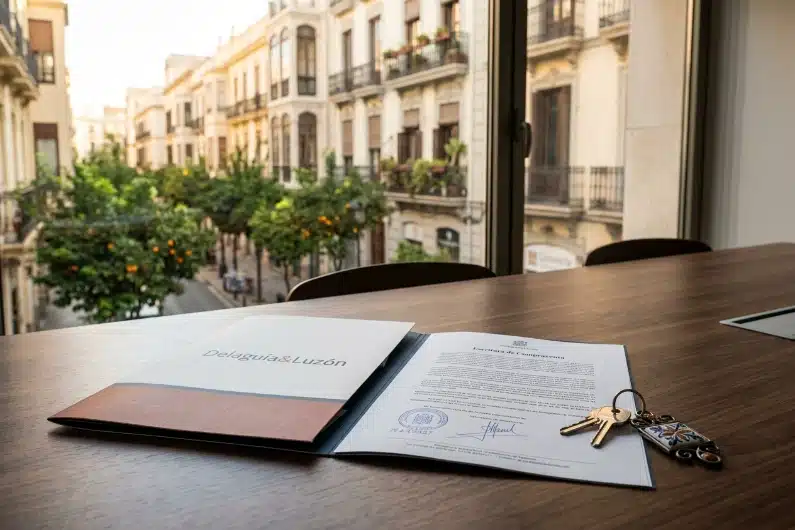
Buying a house in Valencia as a non-resident: key points
- Spain does not restrict foreign nationals from buying residential property, so a non-resident can buy in Valencia without Spanish residency.
- A non-resident buyer needs an NIE, the Spanish tax identification number, to sign the purchase deed and pay taxes.
- For transfers taxed from 1 June 2026, the Valencian transfer tax (ITP) on a resale home is 9%, and 11% where the value exceeds €1,000,000.
- New builds bought from a developer carry 10% VAT plus stamp duty (AJD), which is 1.4% in the Comunitat Valenciana from 1 June 2026.
- Every buyer, including a buyer from the United States, goes through anti-money-laundering checks: banks, notaries and lawyers must identify the buyer and monitor the origin of the funds.
- A Spanish lawyer should check debts, licences and ownership.
- Remote purchases are possible with the power of attorney.
Legal steps to buy a property in Valencia as a non-resident
Buying a house in Valencia as a non-resident is completely possible, and Spain does not restrict foreign nationals from purchasing residential property.
Whether you are from the UK, the EU, the United States, Canada, Australia or another country, you can buy freehold property in Valencia without needing Spanish residency.
However, the process does involve specific legal, tax and administrative steps.
You will need an NIE number, proof of funds, a clear due diligence process and a good understanding of the taxes due at completion and after purchase.
When handled properly, a property purchase in Valencia follows a clear sequence from the reservation to the notary and the Land Registry.
When handled poorly, it can lead to unexpected debts, planning problems, tax issues or delays at the notary.
This guide explains the main steps involved in buying a house in Valencia as a non-resident, including NIE applications, bank accounts, mortgages, contracts, taxes, legal checks and common risks.
Why Valencia is popular with foreign buyers
Valencia is Spain’s third-largest city and one of the most attractive Mediterranean destinations for international buyers.
It offers a strong quality of life, good public transport, international schools, beaches, a historic centre and lower property prices than Madrid or Barcelona.
The wider Comunitat Valenciana also includes popular coastal and inland areas with established foreign communities.
Inland towns such as La Eliana, Bétera and Paterna are popular with families looking for space close to Valencia city.
Coastal towns such as Calpe, Moraira, Jávea, Denia and Altea remain favourites among British, German, Dutch, French and Belgian buyers.
Can non-residents buy property in Valencia?
Yes. There are no nationality restrictions on foreign buyers purchasing residential property in Spain.
EU citizens, UK citizens after Brexit and non-EU buyers can all buy property in Valencia without requiring a residence permit.
The main legal requirement is obtaining a Número de Identificación de Extranjero, commonly known as an NIE.
The NIE is your Spanish tax identification number.
It is required for signing the purchase deed, paying taxes, opening utility contracts and filing future tax returns.
You will also need to prove the lawful origin of your funds under Spanish anti-money-laundering rules.
Step 1: Get your NIE number
The NIE is usually the first practical step when buying a house in Valencia as a non-resident.
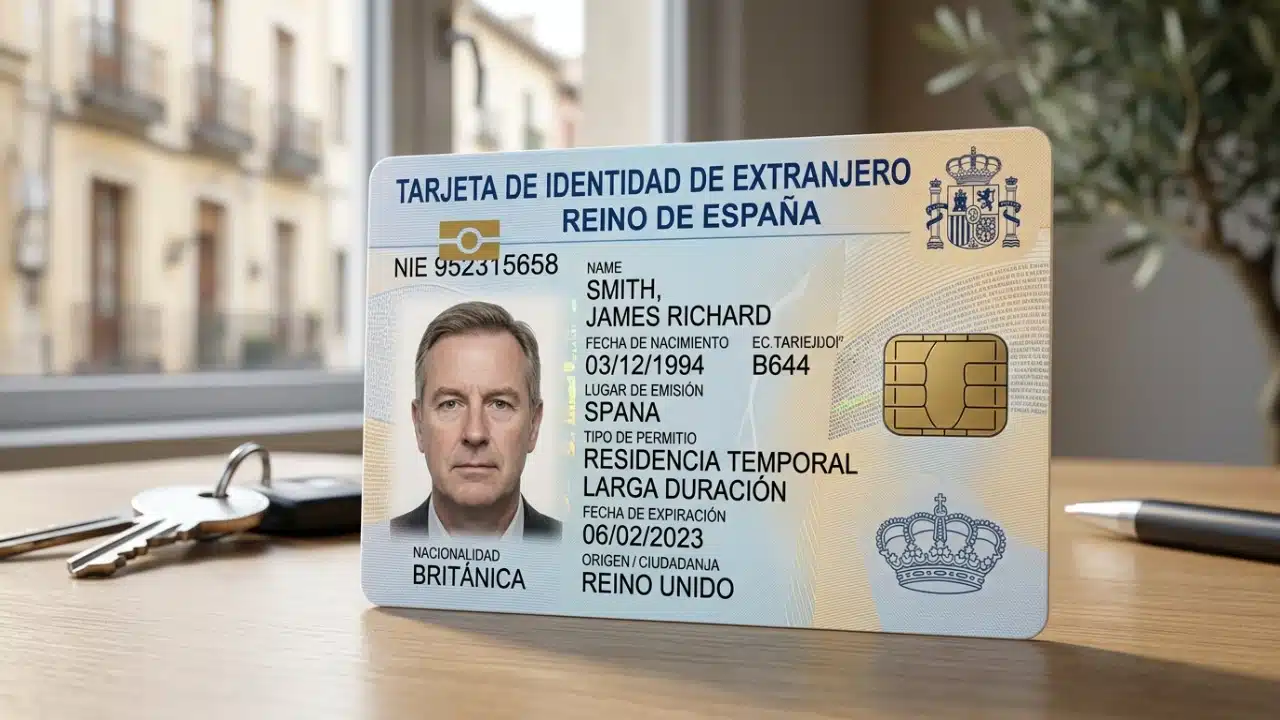
You can apply for an NIE in three main ways:
- In person at a National Police station in Spain.
- Through a Spanish consulate in your country of residence.
- Through a Spanish lawyer with power of attorney.
For non-resident buyers, using a Spanish lawyer is usually the easiest option. It avoids unnecessary travel and helps keep the purchase timeline under control.
Once issued, the NIE is permanent and can be used for future tax filings, property transactions, utility contracts and bank procedures.
Our immigration law team regularly assists foreign buyers with NIE applications in Spain.
Step 2: Open a Spanish bank account
A Spanish bank account is not always legally required, but it is strongly recommended.
It makes it easier to pay notary fees, taxes, utility bills, community fees and annual non-resident tax filings.
Most Spanish banks offer non-resident accounts. You will usually need your passport, NIE, proof of address and documents showing the origin of your funds.
Your lawyer can also help coordinate with banks that are used to working with international property buyers.
Step 3: Consider your mortgage options
Spanish banks do offer mortgages to non-residents, but the conditions are usually different from resident mortgages.
Each bank sets its own lending limit for non-resident buyers.
The limit depends on your income, your existing debts and the valuation of the property.
If you need financing, you should request mortgage pre-approval before signing a reservation or arras contract.
The bank will usually ask for payslips, tax returns, bank statements, proof of savings and details of existing debts.
The property purchase process in Valencia
1. Reservation contract
Once you agree on a price, the seller or estate agent may ask you to sign a reservation contract.
This usually involves paying a small deposit so the property is removed from the market for a short period.
This period allows your lawyer to carry out initial legal checks before you commit to a larger deposit.
2. Legal due diligence
Due diligence is one of the most important parts of the purchase.
Your property lawyer should check the Land Registry, ownership details, mortgages, embargoes, planning status, licences, community debts, IBI payments and utility contracts.
For new builds, the lawyer should also review the first occupation licence and habitability documents.
If the property is rented, the lease and tenant rights must also be reviewed before signing.
3. Arras contract
Once the legal checks are satisfactory, the parties usually sign a contrato de arras.
This is a private purchase contract in which the buyer pays a deposit.
Under article 1454 of the Civil Code, where earnest money (arras) was given, the contract can be rescinded if the buyer accepts losing it or the seller returns it doubled. Have your lawyer read the arras clause before you sign, because the exact terms are set in the contract.
4. Notary signing
The final purchase is signed before a Spanish notary through the escritura pública de compraventa.
At this stage, the buyer pays the remaining balance and the seller hands over the keys.
If you cannot travel to Spain, your lawyer can sign on your behalf using a power of attorney.
5. Land registry registration
After the notary signs, the deed is submitted to the Land Registry.
This step officially records your ownership and protects your title against third-party claims.
The Land Registry law sets a maximum period of fifteen days from the date of the presentation entry, which can be extended in some cases.

Taxes and fees when buying property in Valencia
Transfer tax on resale properties
For resale properties in the Comunitat Valenciana, the main tax is Impuesto de Transmisiones Patrimoniales, known as ITP.
For transfers taxed from 1 June 2026, the general ITP rate in the Comunitat Valenciana is 9% for homes and other property, and 11% where the value exceeds €1,000,000.
Reduced rates exist for certain young buyers, large families and buyers with disabilities, but most of the reduced rates in the Valencian Tax Agency tariff table are for a main home. Ask us whether any of them applies to you.
VAT and stamp duty on new builds
New build properties bought directly from a developer are subject to VAT instead of ITP.
The VAT rate on the delivery of a new home is 10%, plus stamp duty known as Actos Jurídicos Documentados, or AJD.
In the Comunitat Valenciana, the general AJD rate is 1.4% from 1 June 2026, and the Valencian Tax Agency tariff table shows 1.4% for deliveries subject to VAT.
Notary, registry and legal fees
Buyers should also budget for notary fees, Land Registry fees and legal fees.
The tax is only part of the budget, because the notary and the Land Registry follow official tariffs and legal fees depend on the case.
Ask your lawyer for a written breakdown of the taxes and fees before you sign the arras contract, rather than relying only on estimates from estate agents.
Annual taxes for non-resident owners
| Tax | What It Covers | Key Points |
|---|---|---|
| IBI Council Tax | Annual local property tax paid to the town hall. | Based on the cadastral value of the property. Amount varies by municipality and property type. |
| Modelo 210 | Non-resident income tax for foreign property owners. | Applies even if the property is not rented out, because the owner is taxed on imputed income. Rental income must also be declared if the property is rented. Residents of the United States and other countries outside the EU and EEA pay 24% and cannot deduct expenses from rental income (articles 24 and 25 of the non-resident income tax law). |
| Wealth Tax | Tax on high-value Spanish assets owned by non-residents. | Relevant for expensive properties or multiple assets. A non-resident owner gets the state exempt minimum of €700,000 (article 28 of the wealth tax law), while the Valencian €2,000,000 minimum is for residents of the Comunitat. Professional tax advice is recommended before large purchases. |
American buyers in Valencia
This section covers Spanish law and the Valencian angle, and you should coordinate US reporting with your US adviser, because we do not give US tax advice.
Funds transfer and bank checks
Plan the transfer with your Spanish lawyer before you move any money, because Spanish banks must check who is paying and where the money comes from.
The reason is Ley 10/2010 on anti-money-laundering. It lists credit institutions among the obliged persons, requires them to identify customers with reliable documents (article 3) and requires continuous monitoring of operations, including the origin of the funds (article 6).
Our guide to the US and Spanish tax implications of using US investment funds to buy property in Spain covers the funding side in more detail.
Source of funds and notary identification
Notaries, registrars and lawyers who take part in a property purchase are also obliged persons under article 2 of the same law. They identify the buyer and the person on whose behalf the buyer acts (articles 3 and 4).
Prepare your passport, your NIE and documents that show where the money comes from, such as bank statements or the sale documents of a property you sold. The documents requested depend on the bank and the notary, and we tell you which ones to prepare.
Costs and taxes for a non-resident buyer
On a resale home, ITP is 9% for transfers taxed from 1 June 2026, and 11% where the value exceeds €1,000,000, according to the Valencian Tax Agency’s 2026 tax changes. On a new home you pay 10% VAT plus AJD, which is 1.4% from 1 June 2026. Notary, registry and legal fees come on top.
After completion, a non-resident owner files Modelo 210 for imputed income or rental income, and a resident of the United States is taxed at 24% on rental income without deducting expenses. The Tax Agency moved the deadlines for income accrued from 2026: imputed income is filed from 1 April to 31 December of the following year, and rental income with an amount to pay in the first 20 days of April of the following year. Earlier accruals keep their earlier deadlines, as at 6 October 2026.
When you resell
If you later sell, the buyer must withhold 3% of the agreed price and pay it to the Tax Agency on Modelo 211, as a payment on account of your tax. The 3% is not the tax itself: capital gains of non-residents are taxed at 19% (article 25 of the non-resident income tax law), and you settle the difference on Modelo 210.
US reporting
US reporting of a Spanish property, or of the accounts used for the purchase, follows US law. Coordinate with your US adviser before and after the purchase, and we will provide the Spanish documents your adviser asks for, such as the deed and the tax filings.
Best areas to buy in Valencia
Valencia offers very different neighbourhoods depending on your lifestyle, budget and investment goals.
El Cabanyal is popular with buyers looking for beach access and renovation opportunities.
Ruzafa is known for restaurants, nightlife, culture and strong rental demand.
Ciutat Vella and El Carmen suit buyers who want historic architecture and central living.
Patacona and Malvarrosa are attractive for buyers who want to be close to the sea.
Outside Valencia city, towns such as La Eliana, Bétera and Paterna offer more space and easy access to the city.
Further south, Denia, Jávea, Moraira and Altea remain strong options for coastal buyers.
Common risks for foreign buyers
Most legal problems in Spanish property purchases come from issues that could have been identified before signing.
- Unpaid community fees.
- Outstanding IBI or local taxes.
- Planning or licence problems.
- Rural land classification issues.
- Undisclosed tenants.
- Mortgage or embargo charges.
- Incorrect tax retentions at completion.
A Spanish solicitor can identify these risks before you transfer a large deposit or complete the purchase.

Why you need a Spanish lawyer
The notary, estate agent and mortgage broker all play important roles, but they do not represent the buyer in the same way as an independent solicitor.
The notary verifies the public deed. The estate agent usually represents the seller. The bank protects its own lending position.
Your Spanish lawyer is the professional responsible for protecting your interests.
At Delaguía y Luzón, our team assists international clients with property purchases, NIE applications, tax filings, Spanish wills and inheritance planning, and post-completion legal support.
This is especially important when buying a house in Valencia as a non-resident, as many steps can be handled remotely, but must be structured correctly from the beginning.
Speak to our English-speaking property lawyers in Valencia
If you are considering buying property in Valencia, our team can guide you through the legal process, tax costs, due diligence checks and completion steps before you commit.
We assist foreign buyers with NIE applications, power of attorney, conveyancing, tax filings and post-completion support.
Email: felix.delaguia@delaguialuzon.com
Phone: +34 963 74 16 57
Office: Avinguda Regne de València, 6, 1º – 2º, 46005 Valencia, Spain
You can also visit our contact page or browse our areas of expertise.
Frequently Asked Questions
Do I need to live in Spain to buy a house in Valencia?
No. Non-residents can buy property in Valencia without becoming Spanish residents. You will need an NIE number and must comply with Spanish tax and anti-money-laundering requirements.
How long does buying a property in Valencia take?
The time depends on the due diligence, the date the notary can offer and, if there is a mortgage, the bank’s approval and valuation. Your lawyer can set a timetable once the legal checks start.
Can I buy a property in Valencia remotely?
Yes. With a power of attorney, your Spanish lawyer can handle the NIE application, contract signing, notary completion and post-completion formalities on your behalf.
What taxes do non-residents pay when buying in Valencia?
For resale properties, buyers usually pay ITP transfer tax. For new builds, buyers usually pay VAT and stamp duty. Non-resident owners may also need to file Modelo 210 every year.
Do I need a Spanish bank account?
It is not always legally mandatory, but it is strongly recommended for paying taxes, utilities, community fees and annual property-related costs.
What is Modelo 210?
Modelo 210 is the Spanish non-resident income tax return. Non-resident property owners must file it whether the property is rented out or kept for personal use.
Can a UK citizen buy property in Valencia after Brexit?
Yes. UK citizens can still buy property in Spain after Brexit. The purchase process is broadly the same, although residence and immigration rights are separate matters.
What happens if I die without a Spanish will?
Your home country’s succession law may apply, but the process can become slower and more complex. A Spanish will covering your Spanish assets is usually recommended. Our inheritance law team can assist with this.