What this guide covers before you pack your bags
- The cultural differences living in Spain are most visible in the daily schedule — dinner at 21:30, a working day that runs to 20:00, and social life that starts where Northern Europeans finish.
- Punctuality norms are relaxed in social contexts, though professional and government appointments follow strict timed systems with no flexibility.
- Spanish social circles are built on deep-rooted family and local connections; genuine friendships take longer to form than in more transient cities.
- Spanish bureaucracy is more document-heavy and appointment-driven than most expats expect — professional legal assistance significantly reduces delays.
- Spain is not a single culture. The Valencian Community, Catalonia, Andalusia and the Basque Country each carry distinct identities and social customs that shape everyday life.
- American expats face additional compliance obligations, including continued US tax filing requirements that do not end when you leave the country.
- The legal and administrative first steps — NIE, padrón, tax registration — follow a sequence. Getting the order right matters considerably.
What foreigners need to know about the cultural differences living in Spain
Spain is not simply a sunnier version of the UK or a cheaper alternative to California.
It is a country with its own deeply rooted rhythms, priorities, and social codes, and the cultural differences living in Spain will catch even well-prepared expats off guard.
For British nationals relocating after Brexit, and for Americans exploring Spain through the Non-Lucrative Visa or the Digital Nomad Visa, the cultural adjustment runs parallel to the legal one and deserves equal attention from the outset.
The Spanish day: a completely different daily schedule
| Time | Spanish activity | UK / US equivalent |
|---|---|---|
| 07:00–09:00 | Light breakfast (café y tostada) | Same |
| 14:00–16:00 | Main meal (comida) | Lunch (12:00–13:00) |
| 21:00–22:30 | Evening meal (cena) | Dinner (18:00–19:30) |
| 23:00–02:00 | Social activity / going out | 20:00–23:00 |
The Spanish daily schedule is one of the most striking cultural differences living in Spain for British and American arrivals alike.
Restaurants outside tourist areas will not serve a full menu at 12:00.
Inviting Spanish friends to dinner at 19:00 is the social equivalent of inviting them to a mid-morning coffee.
This shift affects not just mealtimes but energy levels, social expectations, and how the working week feels, particularly in the first three months.
Punctuality norms: social versus professional settings
Spanish culture treats time as approximate in social contexts.
Arriving 20 to 30 minutes after the stated time at a social gathering does not offend and is broadly expected.
For government and legal appointments, however, punctuality is non-negotiable; the cita previa (prior appointment) system at the Extranjería, DGT, and AEAT leaves no room for lateness.
Missing a slot can mean a wait of four to twelve weeks before the next available appointment in major cities.
This dual standard, relaxed socially, rigid administratively, is one of the more nuanced cultural differences living in Spain that directly affects how smoothly your legal and residency processes unfold.
The role of family in everyday Spanish life
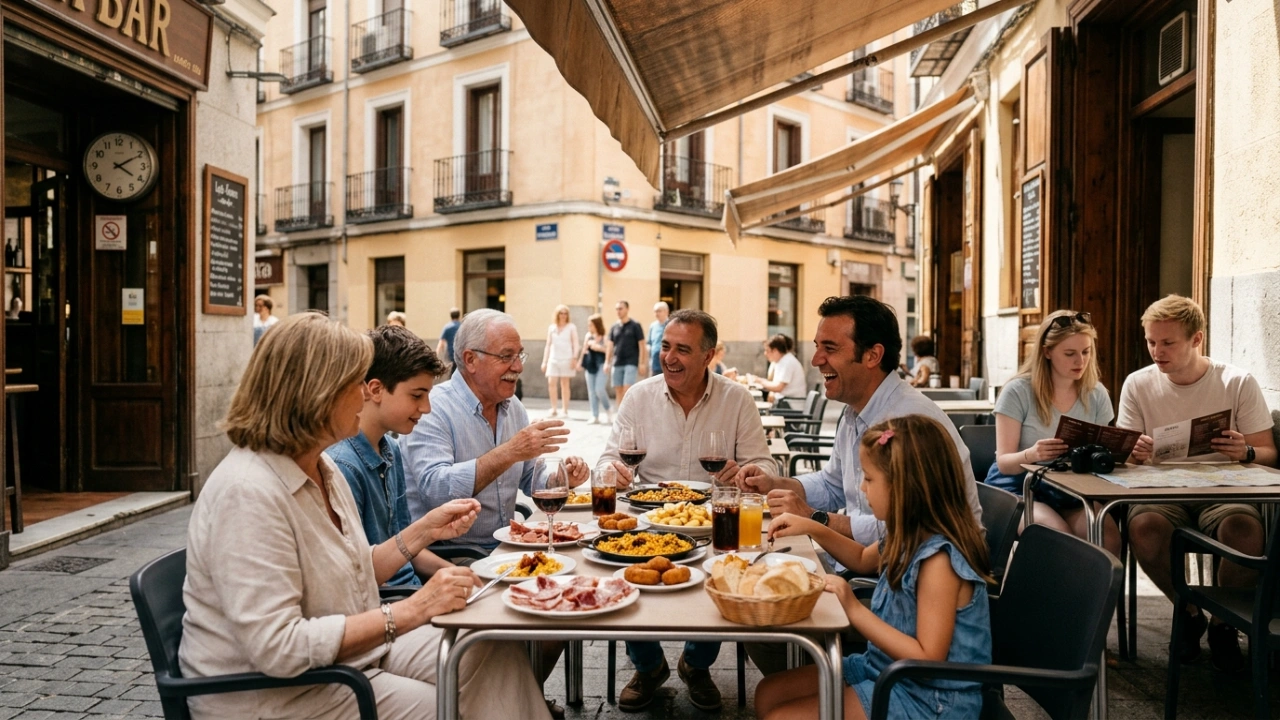
Spanish culture is structured around an extended family network that remains central well into adult life.
- Adult children commonly live at home until their late twenties, reflecting a genuine preference for family proximity as much as economic circumstance.
- Grandparents play a central, daily role in childcare, far more so than in the UK or US, where institutional care and childminders are more common.
- Sunday lunch (comida del domingo) is a near-sacred family institution, typically lasting three to four hours across multiple generations.
For expats without family in Spain, this can create an initial sense of social distance that is easy to misread as coldness.
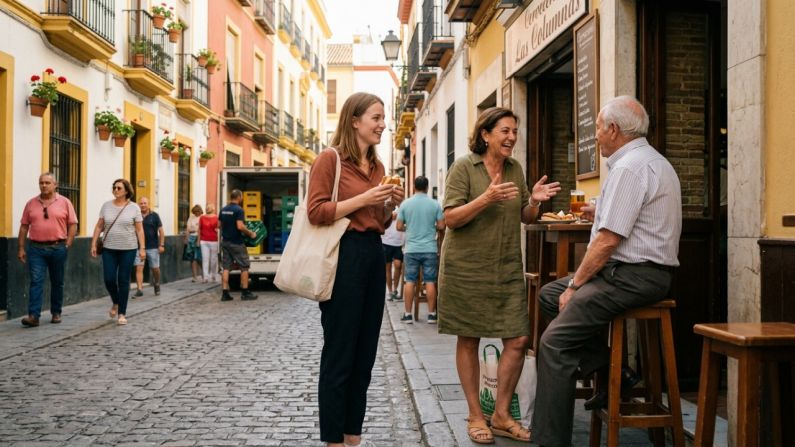
Spanish social groups are often rooted in existing family and childhood connections, and building genuine friendships outside those circles takes sustained effort over twelve months or more.
Understanding this dynamic is essential context for anyone navigating the cultural differences living in Spain in their first year.
Bureaucracy: the single greatest source of expat frustration
Spain operates a highly formalised, document-heavy public administration system.
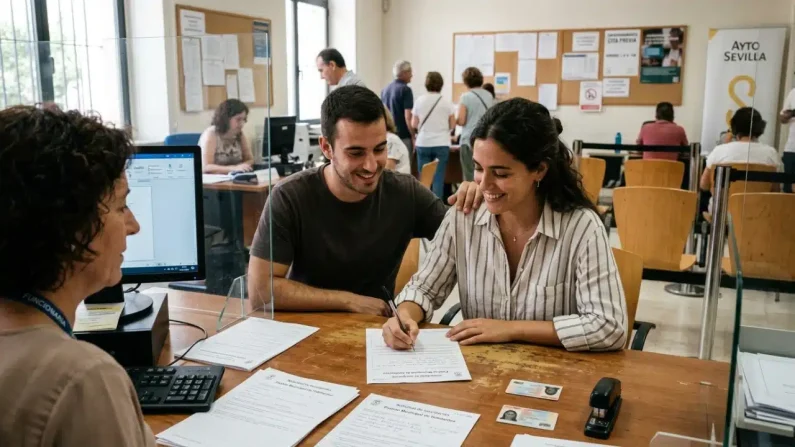
Every significant process requires a prior appointment, the Oficina de Extranjería, DGT, AEAT, padrón registration, and Registro de la Propiedad; all function on cita previa systems.
Documents require physical originals or certified copies, sworn translations (traductores jurados), and apostille authentication for UK-issued certificates.
For British expats in particular, the volume of administrative requirements in the first six months is considerable.
Our detailed guide to obtaining your NIE in Spain covers the full sequence of steps, required documents, and appointment booking process.
The consistent recommendation from expats who navigate this process successfully is to engage a qualified local lawyer for any interaction with public administration, not as a luxury, but as a practical measure that saves significant time.
Our immigration law team advises British and American clients through each stage of the residency process, from the NIE and padrón through to the TIE card and long-term residency permit.
Cultural differences living in Spain by region: not one country, but several
| Region | Languages | UK / US expat presence |
|---|---|---|
| Valencian Community | Spanish + Valencian | Very high (British, French, Belgian) |
| Catalonia | Spanish + Catalan | High (international professionals) |
| Andalusia | Spanish | High (British retirees) |
| Madrid | Spanish | High (corporate expats) |
One of the least-discussed cultural differences living in Spain is the degree to which regional identity shapes daily experience.
Spain is not a culturally uniform country.
In the Valencian Community, Valencian is co-official alongside Spanish and is actively used in schools, public administration, and local media.
In Catalonia, Catalan carries significant political and cultural weight that affects everything from business relationships to attitudes toward incomers.
The Valencian Community combines modern urban infrastructure with a genuinely Spanish social fabric, a well-established international community, and civic celebrations such as the Fallas festival in March, which has no equivalent anywhere else in Europe.
For a detailed breakdown of what life in Valencia costs across housing, utilities, transport, and dining, the Valencia cost of living guide provides current figures and regional comparisons.
What British expats find hardest to adjust to
- Mealtimes. Moving dinner from 18:30 to 21:00 sounds minor and feels genuinely transformative after a few weeks, particularly for families with children in Spanish schools.
- Administrative patience. The NIE, padrón, TIE, and driving licence exchange each take longer than expected. The cumulative administrative load in the first six months is substantial for those who attempt it without legal support. Our guide to residency requirements for British expats after Brexit sets out exactly what changed in January 2021 and what steps apply to new arrivals today.
- Building local friendships. Spanish social groups are warm once entered, but the path in is slow. Genuine integration takes active, sustained effort over a year or more.
- Urban noise levels. Spanish city life is considerably louder than British residential norms — fiestas, late-night socialising, construction, and the acoustic openness of Mediterranean architecture all contribute.
- Healthcare registration. Accessing the Spanish public health system requires correct registration, and the process differs significantly from NHS registration. Our guide to the Spanish healthcare system for expats covers public entitlement, private cover options, and what British nationals need to know post-Brexit.
What American expats consistently underestimate
- The language commitment. Unlike much of Northern Europe, Spain does not default to English outside tourist zones. Spanish proficiency — even at a conversational level — dramatically improves quality of life and administrative outcomes. This is one of the most consequential cultural differences living in Spain for American arrivals, who often arrive expecting an English-accessible environment.
- FATCA and IRS obligations. Relocating to Spain does not end US federal tax obligations. The Spain–US tax treaty provides relief from double taxation, but US citizens must continue filing annual federal returns with the IRS regardless of where they live. Our guide to US and Spanish tax implications for expats is the recommended starting point for any American planning a long-term move.
- Tipping culture. Tipping in Spain is optional and, when offered, modest; rounding up a bill or leaving small change is standard. The 18–22% gratuity convention from the United States is neither expected nor the norm.
- Property purchase costs. Americans accustomed to relatively low transaction costs are often surprised by Spanish property taxes and fees. Our guide to legal fees when buying property in Spain sets out the full cost breakdown.
Social customs, communication, and workplace culture
Several everyday social and professional norms differ significantly from British and American defaults.
Greetings and physical contact
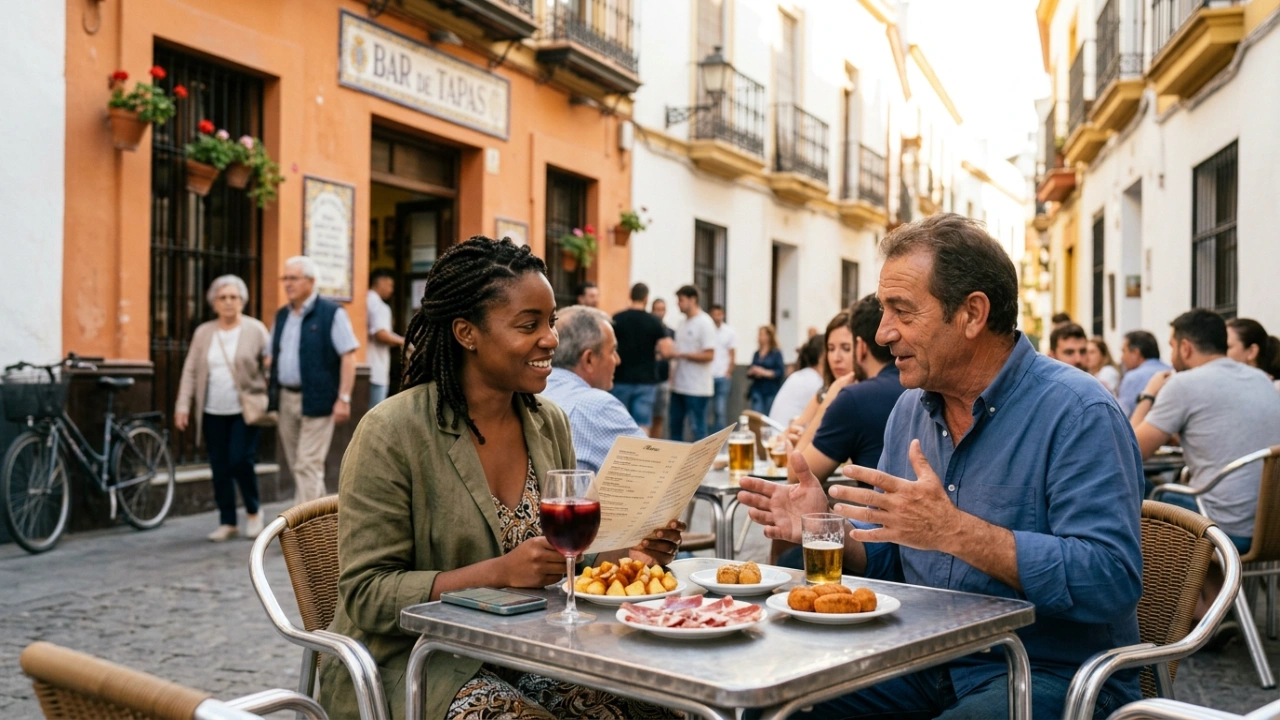
The standard Spanish greeting is two kisses on the cheek, one per cheek, between people who are acquainted.
In professional contexts, a handshake is more common, though the double-kiss greeting does appear in informal business settings once a working relationship has been established.
British reserve around physical contact can read as coldness in Spanish social settings, and awareness of this is part of understanding the cultural differences living in Spain at a day-to-day level.
Directness in communication
Spaniards are generally more direct in conversation than British nationals and considerably more expressive than the reserved public manner common in Northern European cultures.
Interrupting a speaker mid-sentence during a group conversation is common and carries no disrespect; it signals engagement, not rudeness.
Workplace culture
Spanish professional culture places a high value on personal relationships before business transactions.
Decisions are not typically made in first meetings.
Building trust over several interactions is standard, and foreign professionals who expect transactional speed in meetings often misread Spanish deliberateness as disinterest.
For businesses and professionals relocating UK employees to Spain, our team advises on the legal and HR requirements for relocating UK staff, including social security registration, employment contracts, and tax implications.
Religious and civic festivals: their impact on daily life
Spain observes a significant number of public holidays, both national and regional, and these affect business operations, administrative availability, and commercial activity in ways that surprise newly arrived expats.
In the Valencian Community, Fallas (mid-March), the feast of Sant Vicent Ferrer, and local patron saint days mean that office closures are more frequent and less predictable than in the UK or US.
Government offices, banks, and law firms observe all public holidays strictly.
Planning legal or administrative deadlines around the holiday calendar is a practical necessity rather than a courtesy consideration.
Relocating to Spain? Speak to our legal team
Whether you are at the planning stage or already settled in Valencia, our multilingual team can advise on every aspect of your relocation — from visa applications and tax registration to property law and inheritance planning.
Contact our legal team for personalised guidance on your case.
Email: felix.delaguia@delaguialuzon.com
Phone: +34 963 74 16 57
Office: Avinguda Regne de Valencia, 6, 1º-2º, 46005 Valencia
FAQs
Do I need to speak Spanish to live in Valencia?
Functional Spanish is strongly recommended for any expat planning long-term residency in Spain.
English is spoken in international and tourism contexts, but public administration, healthcare, legal processes, and daily social life all function primarily in Spanish, with Valencian also present across the Comunitat Valenciana.
This is one of the practical cultural differences living in Spain that most directly affects the quality of life outside major tourist zones.
Is the siesta still practised in Spanish cities?
The traditional afternoon siesta has largely disappeared from modern urban professional life in cities such as Valencia, Madrid, and Barcelona.
Midday closures from approximately 14:00 to 17:00 persist in smaller towns and village settings, but the siesta is not the universal institution that popular perception suggests.
What is the best region of Spain for British expats?
The Valencian Community offers a combination of high quality of life, competitive cost of living relative to Madrid and Barcelona, a well-established British and international community, excellent healthcare infrastructure, and a genuinely Spanish urban environment that retains its cultural authenticity.
It is consistently the region where British expats report the most straightforward integration experience, particularly in cities such as Valencia and towns along the Costa Blanca.
How do the cultural differences living in Spain affect the legal and administrative process?
The appointment-driven culture, reliance on in-person processes, and regional variation in administrative practices all have direct consequences for how quickly and smoothly residency, tax registration, and property purchases can be completed.
Engaging a local lawyer who understands both the legal framework and the practical administrative culture is consistently the most effective way to reduce delays and avoid procedural errors.