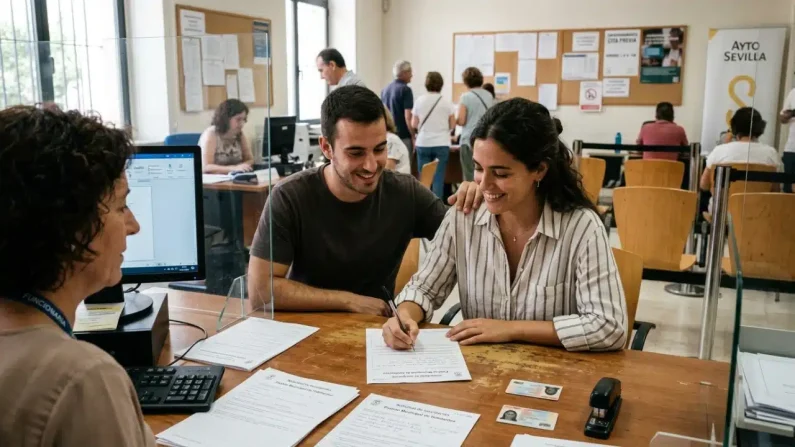
Empadronamiento in Spain: the essentials in 2026
- Empadronamiento in Spain is the registration of your habitual address on the municipal register (padrón) of the town where you live [1].
- Everyone who lives in Spain must register in the municipality where they habitually reside; there is no six-month threshold [1].
- Registration is free, and in Valencia it can be done at any padrón office, not only the one for your district [4].
- Non-EU nationals without long-term residence must renew their registration every two years, or it lapses [1].
- UK nationals covered by the Withdrawal Agreement do not have to renew every two years [5].
- The padrón proves where you live but gives no immigration status and does not by itself make you a tax resident [1][6].
What empadronamiento in Spain is and why it matters
Empadronamiento in Spain is one of the most underestimated steps in Spanish administration.
It is the practical gateway to public healthcare, school places and many residence procedures, and its absence often delays the next stage of a move.
This guide explains the legal basis, the documents Valencia town hall requires in 2026, the renewal rules and how the padrón fits with the NIE, the TIE and residence applications.
It is the first step we recommend to clients planning a move to Valencia.
Spain had 49,801,559 residents on 1 July 2026, the highest figure on record, according to the National Statistics Institute (INE) [7].
The legal basis of the padrón
Empadronamiento in Spain is governed by Articles 15 to 17 of Law 7/1985 on the bases of local government and by Royal Decree 1690/1986, the population regulation [1][2].
Article 15 requires every person who lives in Spain to register in the municipality where they habitually reside, and anyone who lives in several municipalities registers where they spend most of the year [1].
Detailed technical rules come from the resolution of 17 February 2020 issued by the INE and the Directorate-General for Regional and Local Cooperation, amended in 2020 and 2023 [3].
The padrón is not a residence permit, gives no immigration status and does not authorise work.
It records, as an administrative fact, that a named person lives at a specific address from a specific date.
Town halls also use it to calculate their funding, which is one reason they check documents carefully.
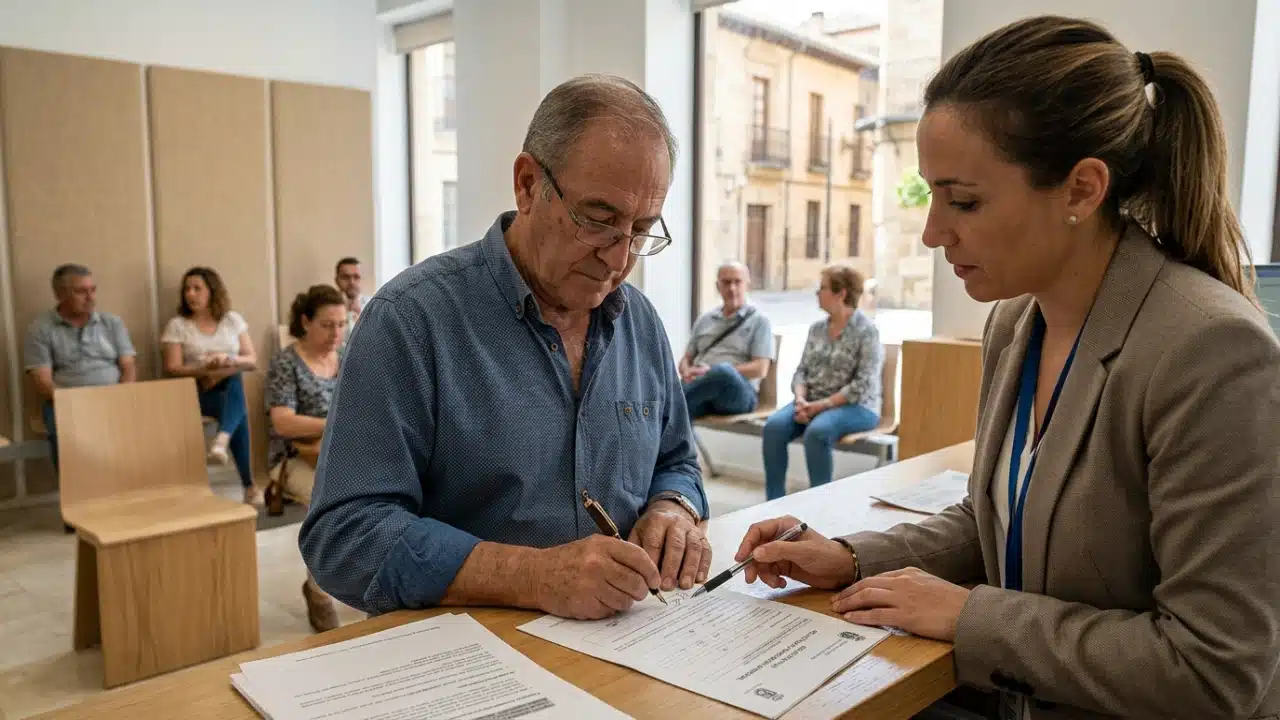
Why empadronamiento in Spain matters for UK nationals
Since 1 January 2021, UK nationals who are not covered by the Withdrawal Agreement need a visa or residence permit to stay in Spain for more than 90 days in any 180-day period, as explained in our guide for British expats after Brexit.
Empadronamiento in Spain links residence applications to a specific address, and the dates it records are common evidence of continuous residence.
Applicants for routes such as the Digital Nomad Visa, the Startup Visa or the non-lucrative visa are regularly asked for a padrón certificate at later stages.
For arraigo under Royal Decree 1155/2024, most types require two years of continuous presence in Spain, and the padrón is the most common way to prove it, although any valid evidence is accepted [8].
The 2026 extraordinary regularisation, which closed on 30 June 2026, also accepted any valid evidence of presence rather than requiring the padrón [9].
Over time, the registration history also supports applications for long-term residence in Spain and for Spanish nationality.
What the padrón unlocks
- The SIP health card for the Valencian public health service, which requires a padrón certificate issued within the last six months [10]; see our guide to the Spanish healthcare system.
- School enrolment in state and state-funded (concertado) schools.
- Inclusion on the electoral roll for municipal elections where voting rights apply.
- Evidence of address for banks, which often request it, as covered in our guide to opening a Spanish bank account.
- Evidence of continuous presence for arraigo, long-term residence and nationality applications.
What the padrón does not give is the right to work, the right to remain or any immigration status; it must be combined with the correct visa or permit.
Who must register
The obligation in Article 15 of Law 7/1985 applies to everyone who lives in Spain, whatever their nationality or immigration status, and whether they own or rent [1].
There is no minimum number of months for empadronamiento in Spain: the test is habitual residence.
Holiday-home owners who live elsewhere and use their Spanish property only occasionally do not register there.
A person without an NIE can register with a passport alone, because the law allows the passport as the identity document for foreign nationals [1].
Town halls must register people who actually live at an address even if they hold no title deed or rental contract, after verifying residence; people living in sub-standard housing or without a home can be registered at an address designated by Social Services [3].
Spain had 7,437,543 foreign nationals on 1 July 2026, according to the INE [7].
Documents required in Valencia in 2026
Since 21 December 2023, the cadastral reference of the property is a mandatory data item on the padrón [1][11].
For empadronamiento in Spain in the city of Valencia, the town hall currently asks for the following documents for a first registration [4].
| Situation | Documents |
|---|---|
| Everyone | Registration form (hoja padronal) and a valid identity document: passport, TIE or EU registration certificate with passport |
| Owners | Title deed, Land Registry nota simple or recent IBI receipt showing the cadastral reference |
| Tenants | Rental contract for more than six months, signed by everyone named in it, plus a rent receipt or bank transfer from the last two months; for a room, the contract must state the total number of rooms and which room is let |
| Living in someone else’s home | Authorisation form for registration in another person’s home; if the home is rented, signed by both the tenant and the owner |
| Cadastral reference | On the main document, or on an IBI receipt, Catastro report or nota simple |
| Children | Libro de familia or birth certificate; if only one parent attends, the other parent’s signed authorisation (Modelo 1) |
Source: Ajuntament de València electronic office [4].
Holiday or tourist contracts will not on their own be accepted as proof of habitual residence, and the town hall may ask for further documents or verify residence.
Where to register in the city of Valencia
Valencia allows registration at any of its padrón offices, and certificates are issued on the spot at any of them [4].
| Office | Address |
|---|---|
| Casa Consistorial (City Hall) | Entrance at C/ Periodista Azzati, 2 |
| Tabacalera | C/ Amadeu de Savoia, 11 (Nave Oeste) |
| Abastos | C/ Alberic, 18 |
| Marítim | C/ Barraca, 53 |
| Patraix | C/ Beat Nicolau Factor, 1 |
| Russafa | C/ Maties Perelló, 5 |
| Trànsits | C/ Comte de Lumiares, 5 |
| Exposició | C/ Guàrdia Civil, 19 |
| Pobles del Nord | Pl. del Poble, 4, Carpesa (Mondays and Wednesdays) |
| Pobles del Sud | C/ Poetessa Leonor Perales, s/n, Castellar (Tuesdays and Thursdays) |
| Benimàmet-Beniferri | Check the current address on the town hall website |
Offices open Monday to Friday from 08:30 to 14:00, and appointments can be booked on 010, on 963 100 010 from outside the city, or online through the town hall website [4].
Booking an appointment is strongly recommended.
In-person registration step by step
| Step | What to do |
|---|---|
| 1. Book | Request an appointment at any padrón office online or by phone |
| 2. Prepare | Gather the documents for your situation, including the cadastral reference |
| 3. Attend | The officer checks identity, proof of address and the cadastral reference |
| 4. Collect | Ask for a volante or certificado, which can be issued at the counter |
Online registration and certificates are available through the Valencia electronic office for people with a digital certificate or electronic DNI [4].
The volante versus the certificado
The volante is an informative document without a signature, while the certificado is a formal, signed document with full legal effect [3].
Neither document has a legal expiry date; each authority that receives it decides how recent it must be [3].
For example, the Valencian health service asks for a padrón certificate no more than six months old for the SIP card [10].
| Feature | Volante | Certificado |
|---|---|---|
| Legal nature | Informative, unsigned | Formal, signed public document |
| Cost | Free | Free |
| Expiry | None in law; set by the receiving body | None in law; set by the receiving body |
| Typical uses | Everyday procedures where an informative document is enough | SIP card, residence and nationality applications, court and tax procedures |
Renewal rules: who must renew and when
Under Article 16.1 of Law 7/1985, non-EU nationals without long-term residence must renew their registration every two years [1].
The two years run from the date of registration or from the last express renewal, and if the renewal is missed the mayor declares the registration lapsed [1][3].
UK nationals covered by the Withdrawal Agreement are treated differently and do not have to renew every two years; their continued residence is checked periodically instead [5].
UK nationals who arrived from 2021 on a visa, such as the Digital Nomad Visa or the non-lucrative visa, must renew every two years.
Spanish citizens, EU citizens and long-term residents do not renew on a fixed cycle, although the town hall carries out periodic residence checks [3].
Keeping empadronamiento in Spain current matters, because a lapsed registration creates a gap in the evidence of continuous residence.
Empadronamiento in Spain, the NIE and the TIE
Empadronamiento in Spain can be completed with a passport before you obtain an NIE.
For non-EU residents collecting a TIE after arriving on a visa, the police and foreigners’ offices frequently ask for a padrón certificate, so it is sensible to register in the first weeks after arrival.
Our guide to residency in Spain explains the wider sequence of steps.
Common mistakes to avoid
These are the errors we see most often with empadronamiento in Spain.
- Bringing a rental contract of six months or less, or one not signed by everyone named in it.
- Arriving without the cadastral reference when the contract does not show it.
- Relying on a tourist or holiday contract as proof of habitual residence.
- Missing the two-year renewal for non-EU residents without long-term residence.
- Failing to update the padrón after moving within the municipality.
- Assuming that registering, or deregistering, settles tax residence on its own.
The city of València had 840,792 registered inhabitants on 1 January 2025, according to the official population figures approved by Royal Decree 1117/2025 [12].
Planning the wider move? Our immigration law team in Valencia coordinates the padrón with visa, TIE and residence applications so that each step supports the next.
Speak to our team about registering in Valencia
Contact our legal team for personalised guidance on your case.
We work in English, French, Spanish and Russian from our office in Valencia.
Email: felix.delaguia@delaguialuzon.com
Phone: +34 963 74 16 57
Office: Avinguda Regne de València, 6, 1º-2º, 46005 Valencia
Frequently asked questions about empadronamiento in Spain
Do I need an NIE before I can register on the padrón?
No.
Foreign nationals can register with a valid passport.
Is there a minimum stay before I must register?
No.
The law requires everyone who lives in Spain to register in the municipality where they habitually reside, with no minimum number of months.
Can I register using a holiday rental contract?
Not on its own.
Valencia requires a rental contract of more than six months, and tourist contracts trigger additional checks.
Is empadronamiento free?
Yes.
All padrón procedures in Valencia are free of charge.
How long does it take to get the certificate?
In Valencia, certificates are issued on the spot at any padrón office.
They can also be requested by phone on 010 or online with a digital certificate.
How long is a padrón certificate valid?
There is no legal expiry date.
Each authority sets its own limit; the Valencian health service, for example, asks for one issued within the last six months.
How often must the padrón be renewed?
Non-EU nationals without long-term residence must renew every two years.
UK nationals covered by the Withdrawal Agreement, EU citizens and long-term residents do not renew on a fixed cycle.
Can my landlord stop me registering?
Registration does not depend on the landlord’s consent, because the padrón records where you actually live.
Valencia may, however, ask for extra documents if the contract contains a clause prohibiting registration.
Does registering make me a Spanish tax resident?
No.
Tax residence is defined in Article 9 of the Personal Income Tax Law, mainly by presence of more than 183 days or the centre of economic interests, and the padrón is only one piece of evidence.
Do I need to deregister when I leave Spain?
You should request your removal (baja) from the padrón when you leave permanently.
It helps document the date your Spanish residence ended.
References
- Law 7/1985, of 2 April, on the bases of local government, Articles 15 to 17 (BOE)
- Royal Decree 1690/1986, population and territorial demarcation regulation (BOE)
- Resolution of 17 February 2020 on technical instructions for municipal registers (BOE)
- Ajuntament de València: registration on the padrón
- INE Registration Council: UK nationals and the padrón, 27 February 2020
- Law 35/2006 on Personal Income Tax, Article 9 (BOE)
- INE: continuous population statistics, 1 July 2026
- Royal Decree 1155/2024, Article 126 (BOE)
- Royal Decree 316/2026 on the extraordinary regularisation (BOE)
- Generalitat Valenciana: health card frequently asked questions
- Royal Decree 141/2024 amending the population regulation (BOE)
- Royal Decree 1117/2025, official population figures at 1 January 2025 (BOE)